
Selling a Trucking Company: The Records That Decide What Buyers Pay
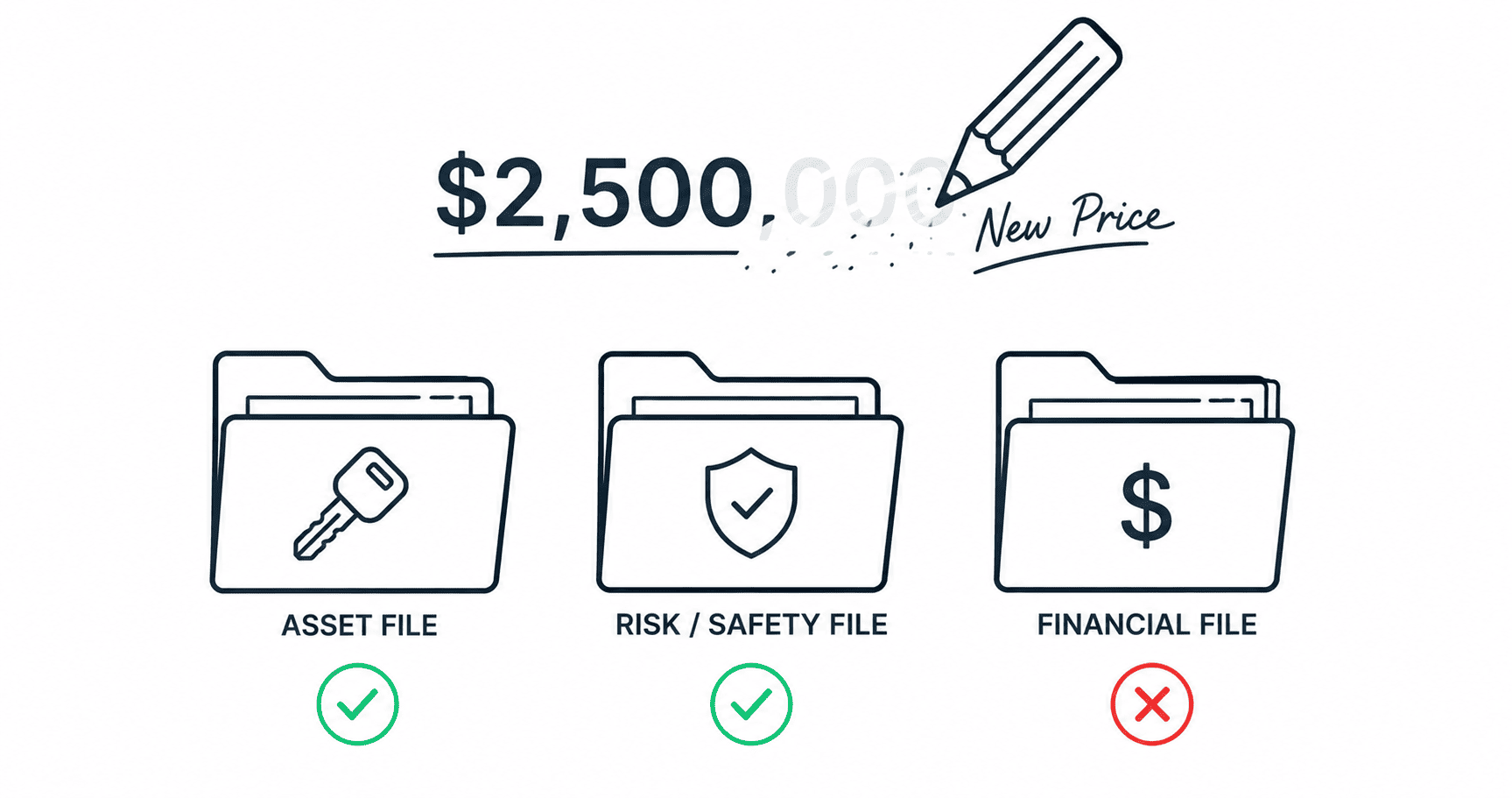
Somewhere between one third and one half of trucking company owners are within a decade of retirement, depending on whose survey you read. Most will sell to another operator, a consolidator, or a private buyer, and almost all of them will discover the same thing: the price on the letter of intent is written in pencil. The records rewrite it.
Trucks, contracts, and drivers are what a buyer thinks they are purchasing. What they actually price is the paper behind those things: titles, maintenance files, driver qualification records, safety history, and financial statements that either hold together or do not. This post covers the records that decide what buyers pay for a trucking company, and when to start getting them ready.
What Do Buyers of a Trucking Company Actually Examine?
Three files, in roughly this order. The asset file: what equipment exists, what condition it is in, and who actually owns it. The risk file: drivers, safety history, insurance losses, and open claims. The financial file: what the company earns, how it collects, and how much of the reported profit would transfer to a new owner. Weakness in any one of the three discounts the price. Weakness in two usually ends the conversation.
How Do Equipment and Maintenance Records Affect the Price?
The equipment list is the easy part: units, VINs, years, mileage. The paper behind it is where deals move. Titles need to match the entity selling them, and liens need payoff numbers, because a buyer cannot close on trucks the lender still owns. Lease-versus-owned has to be documented per unit, with buyout terms attached.
Maintenance records per unit are the difference between selling trucks and selling well-kept trucks. A complete service history supports the asking price; a folder of receipts and memory supports a discount for the deferred maintenance the buyer will assume. Buyers walk the yard with an inspector either way. The records decide whether the inspection confirms your story or replaces it.
Why Do Driver Files and Safety History Matter So Much?
A trucking company transfers its past to its buyer. The safety record follows the authority, insurance pricing follows the loss runs, and a buyer will pull five years of both before believing anything else in the deck. Complete driver qualification files, clean drug and alcohol program records, and a documented maintenance program are what let a buyer believe the safety story is process, not luck.
Open cargo and liability claims deserve their own schedule, with reserves and status attached. Undisclosed claims found late are the classic late-diligence deal killer, and they cost more in trust than in dollars.
What Financial Records Should Be Ready Before the First Conversation?
Per-entity books, reconciled monthly, with a close history a buyer can trail back through. Customer and freight mix by month, so revenue quality is visible: contract versus spot, rate per mile trend, deadhead percentage, concentration in the top accounts. A worked accounts receivable aging, because receivables usually transfer and old balances price at a discount. And the add-back schedule, documented line by line: owner compensation above market, family payroll, personal expenses, one-time costs. Every supported add-back defends earnings. Every unsupported one invites a price cut at a multiple.
If the company runs as more than one entity, holding company, operating company, equipment entity, the intercompany balances need to reconcile before anyone outside the family reads the books. The mechanics are covered in our multi-entity back office guide.
The three files, and what a gap in each one costs
| File | What must be in it | What a gap does to the deal |
|---|---|---|
| Asset file | Titles matching the selling entity, lien payoffs, maintenance history per VIN | Missing titles stall closing; thin maintenance history reprices the fleet as-is |
| Risk file | Driver qualification files per 49 CFR Part 391, loss runs, safety record, insurance history | Incomplete DQ files become an indemnity ask or an escrow holdback |
| Financial file | Per-entity books with a two-year close history, defensible AR aging, documented add-backs | Every unsupported number becomes a price adjustment in the buyer’s favor |
Notice the direction of every consequence: gaps never move price up. Diligence is asymmetric, and the seller’s only defense is a file that answers the question before it is asked. The full checkpoint list, organized the way a buyer works through it, is the sale readiness checklist, which includes a trucking-specific version.
When Should Preparation Start?
Twelve to twenty-four months before the first conversation, for one reason: buyers pay for history, not snapshots. Eight quarters of consistent closes, worked aging, and documented maintenance reads as an operation. A cleanup performed the quarter before the teaser reads as staging, and diligence teams are professionally suspicious of staging. The broader playbook is in preparing a freight company for sale.
The same preparation applies whether you run trucks or broker freight. The sale readiness checklist covers the records a buyer asks for on either side, including the financial history, the add-back documentation, and the compliance files that get examined late.
How ClearLane Helps Sellers Get Ready
We prepare the records layer: books kept current per entity, receivables worked so the aging is defensible, monthly reporting that builds the two-year track record, and the add-back schedule maintained with documentation instead of memory. Owners planning an exit often start with independent reporting years ahead of the sale, because the same package that keeps a stepped-back owner informed is the package a buyer eventually reads. Valuation, deal structure, and legal work stay with your M&A advisor, CPA, and counsel. We make sure the records they argue from hold up.
Frequently Asked Questions
Titles and lien payoffs per unit, maintenance history per VIN, complete driver qualification files, five years of insurance loss runs, a schedule of open claims with reserves, per-entity financial statements with a monthly close history, a worked AR aging, and a documented add-back schedule. Buyers price the completeness of that package as much as its contents.
The paperwork can be assembled in weeks, but the value comes from history: buyers want to see eight quarters of consistent closes, worked receivables, and maintained equipment records. Start twelve to twenty-four months out and the records tell the story themselves.
Almost always, and early. The safety record follows the authority and drives what the buyer will pay for insurance after close, so CSA history and five years of loss runs are among the first requests. A clean file supported by documented maintenance and driver programs is a pricing asset.
The list of expenses removed from reported earnings because they will not transfer to a buyer: owner compensation above market, family members on payroll, personal expenses run through the company, and one-time costs. Each add-back needs documentation, because adjusted earnings price at a multiple.
Yes. Receivables usually transfer with the business, and balances past 60 or 90 days get discounted or carved out entirely. Working the aging down in the year before a sale converts questionable paper into cash and shows a buyer a collections process that runs.
Thinking about an exit while the trucks are still running hard? Request a demo and we will show you what buyer-ready records look like for a carrier. Or email us at info@getclearlane.com.